 Skip to content
When you start a vegetable patch, fill a raised bed or renew the growing medium in a greenhouse, the same question comes up: should you choose horticultural peat or garden soil? Both are good building blocks for a growing medium, but they work in different ways – and the right choice depends on the plant, the location and your goals.
In this guide we go through what horticultural peat and garden soil actually are, how they differ, when to choose each one and how to get the best out of them by combining the two. At the end, we answer the most common questions.
What is horticultural peat?
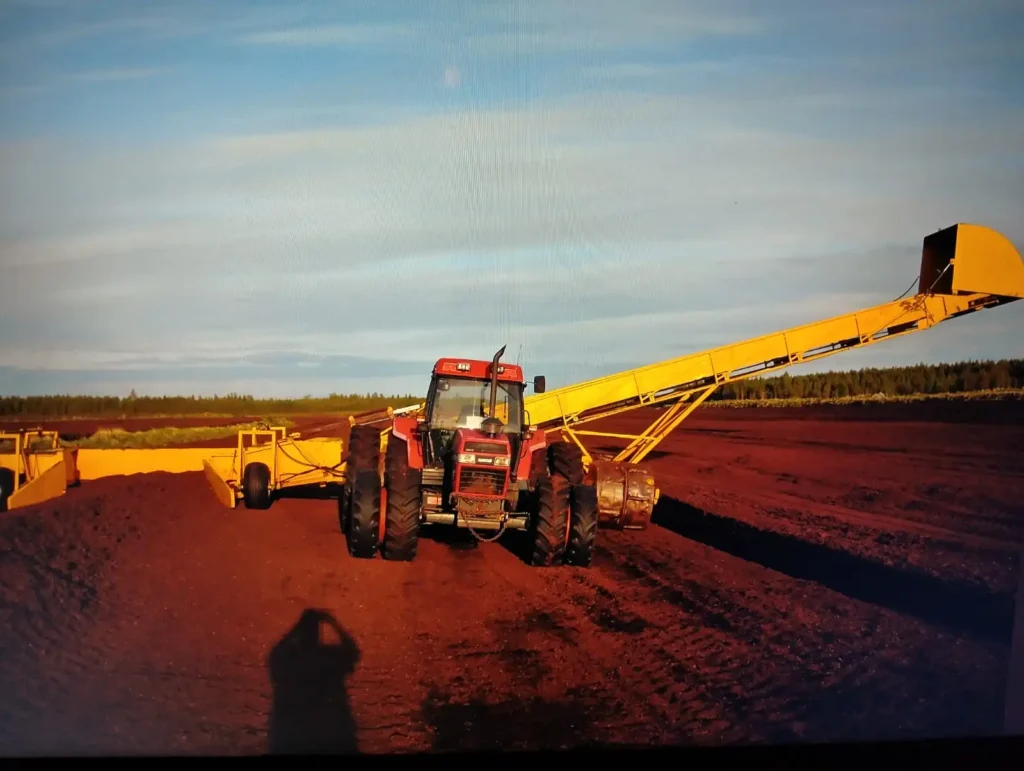
Horticultural peat is light-brown sphagnum peat harvested from a bog and used as the main raw material of a growing medium. On its own it is not finished soil, but rather the base of a growing medium whose properties are adjusted with liming and fertilising.
The strengths of horticultural peat come from its structure:
- Excellent water retention – peat absorbs and releases water evenly, so plants are less prone to drought stress.
- Airy structure – peat keeps the growing medium loose, so roots get oxygen and grow freely.
- Clean and consistent – good-quality horticultural peat is practically free of weed seeds, pathogens and heavy metals, and is a local raw material.
- Adjustable – because peat is naturally low in nutrients and acidic, you can tailor it to suit exactly the plants you want to grow.
Precisely because of this purity and controllability, horticultural peat is a standard raw material in professional growing – for example for greenhouse cucumbers, tomatoes and lettuces. Explore Tainikoski’s horticultural peat.
Things to note about horticultural peat
Because horticultural peat is acidic (pH typically 3.5–4.5) and low in nutrients, it is not used on its own for most plants without liming and fertilising. That is also its advantage: you get full control over the composition of the growing medium.
What does garden soil mean?
Garden soil – or simply “soil” – refers to a ready-to-use growing medium that contains organic matter, nutrients and often compost. Soil is sold under many names: garden soil, potting soil, planting soil and so on.
The strengths of garden soil:
- Ready to use – soil is ready for planting immediately, with no need to lime or fertilise it separately.
- Nutrient-rich – it already contains nutrients that are available to plants.
- Easy to use – well suited to garden plantings, lawn patching and establishment, and seasonal flowers.
Garden soil is therefore a quick and effortless solution when you want to plant straight away and don’t need to fine-tune anything.
Things to note about garden soil
The composition and quality of ready-made soil vary by manufacturer and batch. In cheaper products the organic matter can break down quickly, so the growing medium compacts and loses its airiness within a single growing season.
Horticultural peat vs. garden soil – a comparison
The table below sums up the key differences when comparing horticultural peat vs. garden soil.
| Property | Horticultural peat | Garden soil |
|---|---|---|
| Readiness for use | Adjusted with lime and fertiliser | Ready to use |
| Water retention | Excellent | Good–variable |
| Airiness / structure | Excellent and durable | Variable, can compact |
| Nutrients | Added as needed | Already present |
| pH | Acidic, adjustable | Usually pre-adjusted |
| Consistency | High | Varies by product |
| Best use | Base of a growing medium, soil improvement, professional growing | Quick garden plantings, seasonal flowers |
The key insight is that horticultural peat and garden soil are not mutually exclusive options – they solve different problems.
When to choose horticultural peat, and when garden soil?
Choose horticultural peat when:
- you want to improve the structure and water retention of heavy or compacted soil
- you are setting up a greenhouse or growing vegetables for which purity and consistency matter
- you want to adjust the acidity and nutrients of the growing medium for specific plants (for example blueberries and rhododendrons, which thrive in acidic conditions)
- you grow root vegetables such as potatoes and carrots, which benefit from a loose base
Choose garden soil when:
- you want to plant immediately with no extra work
- you are doing small garden plantings or patching a lawn
- you are planting seasonal flowers in pots and hanging baskets
The best solution: combine horticultural peat and soil
In practice the best result often comes from a peat-soil mix – a blend of horticultural peat and soil. The combination gets the best of both: peat brings looseness, airiness and water retention, while soil brings ready nutrients and organic matter.
Such a mix stays airy throughout the growing season, forms a durable soil structure and does not compact as easily as soil alone. In soil improvement, horticultural peat loosens the ground, increases its humus content and improves water retention – the benefit is especially clear on clay and compacted soils.
If you’re not sure which mixing ratio suits your plants and soil, we’re happy to help. Get in touch and ask for advice on choosing a growing medium.
What about the environmental debate around peat?
There is lively debate about the use of peat, and many manufacturers are developing peat-free alternatives. Responsibly produced domestic horticultural peat is, however, still one of the best raw materials for a growing medium in terms of its properties, and its production and after-use are constantly being developed in a more sustainable direction. The choice is best made on the basis of your own growing goals and values.
Summary
When weighing up horticultural peat vs. garden soil, remember a simple rule of thumb: horticultural peat is the best base for a growing medium and soil improver when you want to control structure and nutrients, while garden soil is the handiest ready-made solution for quick plantings. Most often the best result comes from combining the two.
Want to make sure your plants get the best possible start? Explore our high-quality domestic horticultural peat and ask us for advice on choosing the right growing medium.
Frequently asked questions
Can horticultural peat be used on its own?
For most plants, not directly, because horticultural peat is acidic and low in nutrients. It is limed and fertilised according to the plant’s needs. An exception is acid-loving plants such as blueberries, for which acidic peat is suitable almost as is.
What is the main difference between horticultural peat and garden soil?
Horticultural peat is an adjustable base raw material that provides structure, airiness and water retention. Garden soil is a finished, nutrient-rich, ready-to-use growing medium. Peat is modified; soil is used as is.
Which is cheaper, horticultural peat or garden soil?
Relative to volume, horticultural peat is often an inexpensive base raw material, but it also requires lime and fertiliser. Ready-made soil costs more per litre but saves work. The total cost depends on the area and the intended use.
Is horticultural peat suitable for soil improvement?
Yes. Horticultural peat loosens compacted soil, improves water retention and increases humus content. On clay and compacted soils in particular, it improves soil structure over the long term.
Can I mix horticultural peat and soil myself?
Yes. You can make a peat-soil mix yourself by blending horticultural peat and soil in a suitable ratio. This gives you an airy, nutrient-rich growing medium that lasts the whole growing season.
